How Much Do Timang Beach fishermen earn from Lobster Fishing?
Timang Beach fishermen’s earnings depend on several factors, including the lobster season, ocean conditions, how many lobsters are caught, their size, and the market price. Unlike a regular monthly salary, lobster fishing provides an unpredictable income. On a productive night, a fisherman may earn a worthwhile amount from selling the catch. However, during rough seas or periods when lobsters are difficult to find, the catch may be small or even insufficient to generate meaningful earnings.
To understand how much Timang Beach fishermen earn, it is important to distinguish between the selling value of the catch and the money they actually take home. The total value depends on the weight and species of lobster caught and the price buyers offer. Fishermen may also need to account for equipment, transportation, bait where applicable, and other operating expenses. If several people participate in the fishing activity, the proceeds may also be shared. Therefore, the Timang Beach fishermen’s earnings can vary considerably from one fishing trip to another.
Catching Lobsters at Timang Beach Using Krendet
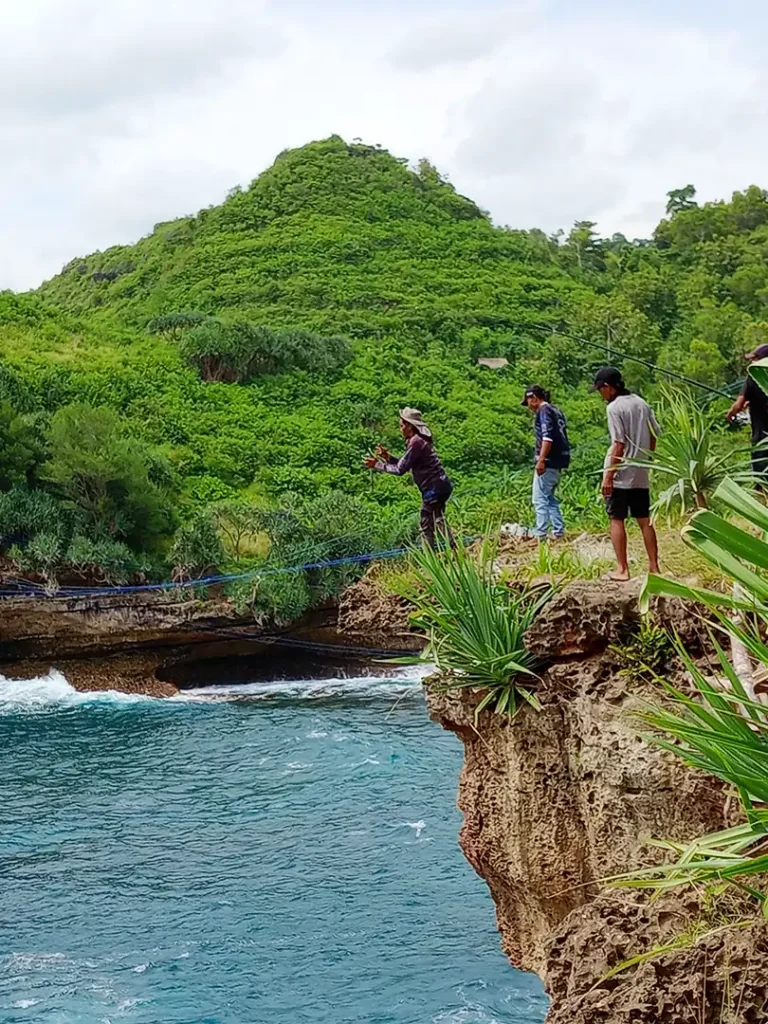
One of the traditional techniques associated with lobster fishing along the rocky coast of Gunungkidul is the use of Krendet. This fishing tool is designed to help fishermen catch lobsters around rocky areas where the crustaceans hide. A Krendet generally consists of a net or netted trap arrangement that can be positioned near suitable lobster habitats. Fishermen use their knowledge of the coastline, tides, waves, and lobster behavior to determine where and when to fish.
Using Krendet requires experience, patience, and careful attention to sea conditions. The rocky shoreline can be dangerous, particularly at night when visibility is limited and large waves can strike unexpectedly. Fishermen must understand the safest access points and pay attention to changing tides and ocean conditions. Local knowledge is an important part of the fishing process and reflects skills developed by coastal communities over many years.
What Lobster Species Are Commonly Caught at Timang Beach?
The waters around Timang Beach in Gunungkidul are known for Ornate Spiny Lobsters (Panurilus Ornatus), which are valuable seafood catches for local fishermen. Other species include Green Lobster (Panurilus Versicolor), Sand lobster (Panurilus Homarus), and Spiny lobster (Panurilus Longipes). These names are familiar in local seafood markets and are often used to distinguish lobsters by their appearance, color, and characteristics.
Why Lobster Size and Season Affect Timang Beach Fishermen’s Earnings
Lobster size and market demand play an important role in determining fishing income. Larger lobsters may command higher prices, while the value of smaller specimens depends on local buying standards and market conditions. The total weight of a catch is also important, meaning that catching several small lobsters does not necessarily generate the same income as catching a few larger ones. Buyers, demand from seafood restaurants, and seasonal price changes can all influence the final selling price.
Weather and sea conditions also affect how often fishermen can go out and how much they can catch. Strong waves may make fishing dangerous or prevent fishermen from reaching their usual fishing areas. During more favorable conditions, they may have better opportunities to fish, although a calm sea does not guarantee a successful catch. For this reason, lobster fishing at Timang Beach involves both skill and uncertainty, with fishermen constantly adapting to the changing environment.
The Connection Between Lobster Fishing and Timang Beach Tourism
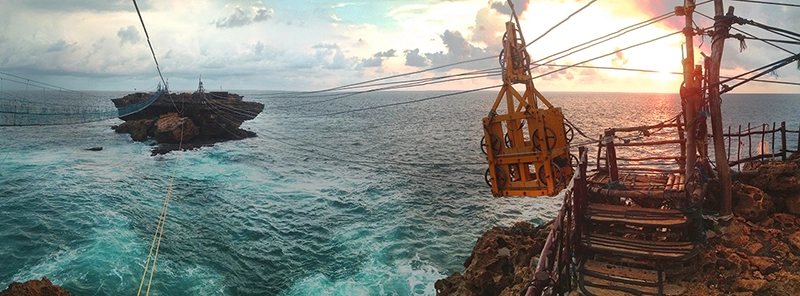
Today, Timang Beach is known internationally as a tourism destination, particularly for its Gondola ride, Suspension Bridge, and rugged coastal landscape. Yet fishing remains an important part of the area’s identity. The same coastline that attracts visitors also supports the livelihoods of local fishermen. Tourism and fishing offer different economic opportunities, and both contribute to the character of the Timang Beach community.
Visitors can learn more about this local connection by exploring the area responsibly, enjoying fresh seafood at local establishments such as Kedai Lobster Pak Sis, and using local services when visiting the coast. The Timang shuttle jeep is commonly used by visitors to travel from the parking area toward the beach, while fishermen continue their work according to fishing seasons and sea conditions. Understanding this relationship helps visitors appreciate Timang Beach not only as a scenic attraction but also as a working coastal environment.
Supporting Local Fishermen and Coastal Livelihoods
Lobster fishing at Timang Beach represents more than the value of seafood sold at the market. It reflects local knowledge, traditional fishing methods, and the daily efforts of people whose livelihoods depend on the sea. Although the income from lobster fishing can be attractive during productive periods, it remains uncertain because catches, prices, and weather conditions change. A realistic understanding of fishermen’s earnings must therefore consider both the potential value of a good catch and the risks of an unsuccessful fishing trip.
For travelers visiting Timang Beach, learning about Krendet fishing and the local lobster trade offers a deeper perspective on life along the southern coast of Yogyakarta. Behind the famous Gondola and dramatic waves are fishermen who continue to work with the ocean, balancing traditional livelihoods with the growth of tourism. Their story is an essential part of what makes Timang Beach more than just a destination for adventure.