Timang Suspension Bridge: History, Local Builders, and the Adventure Above the Indian Ocean
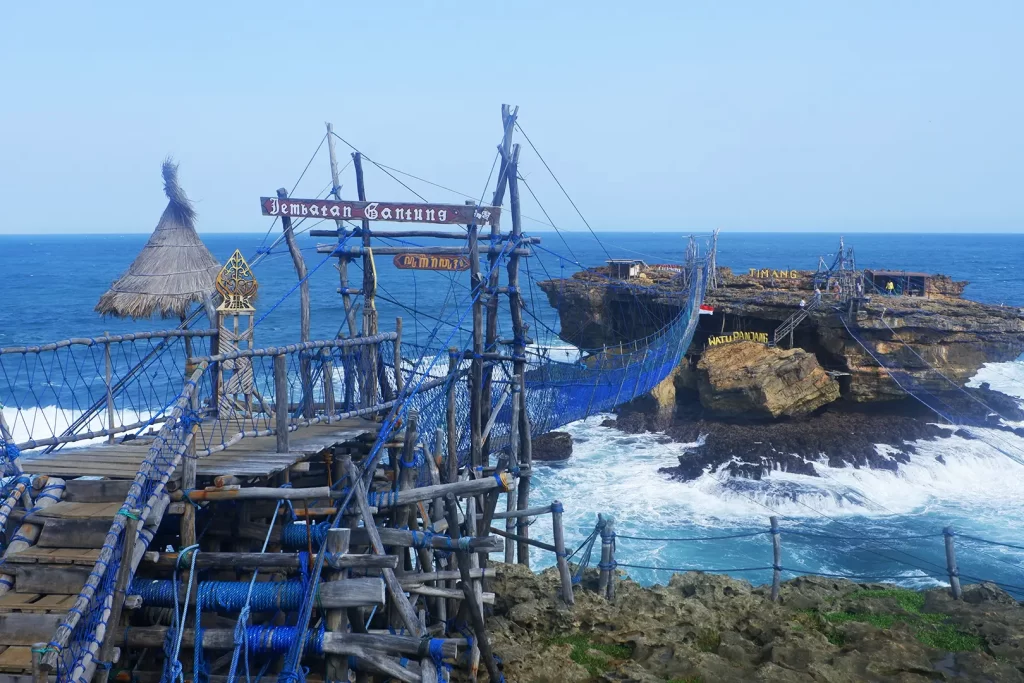
The Timang Suspension Bridge is located just next to Gondola Timang. This bridge was built after the Gondola Timang for tourism purposes. Spanning around 120 meters, this bridge is made using rope and Teak wood. This bridge was built as an alternative to reach the rocky islet near the beach, commonly known as Watu Panjang Island. Unlike ordinary suspension bridges built for everyday transportation, this bridge is closely connected to the livelihoods of local fishermen and the growth of coastal adventure tourism. Its wooden steps, rope supports, and exposed position above the crashing waves create an experience that combines local history, natural beauty, and adrenaline.
The Origins of Timang Suspension Bridge
The story of Timang Suspension Bridge is closely associated with the area’s lobster-fishing tradition. Before Timang Beach became a popular destination for domestic and international travelers, local fishermen ventured toward the offshore rocky islet to catch lobsters hiding among the coastal rocks. Reaching these fishing grounds was challenging because the southern coast of Gunungkidul faces powerful Indian Ocean waves, with steep rocks and unpredictable sea conditions. The traditional Timang Gondola became an important means of crossing the gap, allowing fishermen to reach the islet without swimming through dangerous waters. Over time, the growing popularity of Timang Beach created an opportunity to develop another crossing option: a suspension bridge.
Timang Suspension Bridge was built in March, 2017 by a community group consisting of 12 residents from the Danggolo and Luwengombo hamlets, in Purwodadi Village, Tepus District, Gunungkidul Regency. The group was led by Mr. Siran. The construction took around one month and cost approximately IDR 50 million. The project was a community-led initiative rather than a large government infrastructure project. This local involvement is an important part of the bridge’s story because it demonstrates how residents developed a new attraction using their knowledge of the coastline and their connection to the surrounding fishing community.
The main materials are rope and Teak wood planks, creating a narrow walkway suspended above the sea. The bridge is also equipped with a safety net. The bridge was positioned beside the existing Timang Gondola, giving visitors an additional way to cross toward the rocky islet. These details distinguish the suspension bridge’s history from that of the gondola: the gondola was originally developed for local fishing activities, while the suspension bridge was introduced later as an alternative crossing experience for visitors.
Timang Suspension Bridge Construction
The Timang Suspension Bridge consists of Teak wood planks arranged along a narrow crossing and supported by ropes. There are 6 main ropes: 4 ropes as suspended ropes and 2 ropes as walkaway ropes. The suspended ropes are divided into 2 rows, storeyed. The main ropes were tied to some Teak wood posts as the bridge tower. The anchor block was tied to coral rock, then strengthened with concrete cement. There are also 2 layers of safety net on each side. Since most residents were fishermen, the safety net was made as a fishing net.
Unlike a conventional road bridge, its lightweight structure can move when exposed to coastal winds. As visitors walk across, they can feel the movement of the bridge while looking down toward the waves breaking against the rocks below. The crossing provides a different experience from the traditional wooden gondola, which carries passengers while being pulled across the gap. The bridge is particularly appealing to adventurous travelers who want to experience the dramatic coastline on foot. However, the bridge’s exposed position means conditions at sea and the instructions of the local operators are important considerations before attempting the crossing.
From a Fishing Community to an Adventure Tourism Destination
The development of Timang Suspension Bridge reflects the wider transformation of Timang Beach into an adventure tourism destination. The gondola had already attracted attention because of its unusual design and its original role in Lobster fishing. The Suspension Bridge added another attraction, allowing visitors who preferred walking to experience the crossing. Together, these facilities helped create a distinctive tourism identity for Timang Beach, where local livelihoods, traditional ingenuity, and the rugged landscape remain closely connected. Visitors can also learn about the local lobster-fishing tradition and enjoy seafood around the beach area, making the destination more than just an adrenaline attraction.
Timang Suspension Bridge Tickets
Timang Suspension Bridge tickess is IDR150.000/person. Since Timang Suspension Bridge was built and operated by a different group than the one that built Timang Gondola, visitors also must buy different tickets to use Timang Suspension Bridge to cross to Watu Panjang Island. So, if visitors want to cross to Watu Panjang Island using Timang Gondola and then want to go back using Timang Suspension Bridge, visitors must buy separate tickets.
What Makes Timang Suspension Bridge Unique?
The most remarkable feature of Timang Suspension Bridge is its setting. Instead of crossing a river or connecting two areas of land, the bridge stretches over a section of the open sea toward a rocky offshore destination. The contrast between the wooden walkway, the rugged coastal cliffs, and the powerful waves creates a memorable landscape for photography and sightseeing. Visitors can observe the ocean from a different perspective and appreciate the challenging environment in which local fishermen have traditionally worked. For travelers exploring the southern coast of Yogyakarta, the bridge offers an experience that differs significantly from relaxing on a sandy beach or visiting more conventional tourist attractions.
Travelers planning to visit Timang Suspension Bridge should remember that it is an exposed coastal attraction, not an ordinary pedestrian walkway. Sea conditions, strong winds, and wave activity can affect whether crossing is permitted. Always follow the local operators’ instructions, use any required safety equipment, and do not attempt to cross if the attraction is closed or conditions are considered unsafe. Ultimately, the suspension bridge is memorable not only for its thrilling setting but also for the story of the local community that built it and helped shape Timang Beach into one of Yogyakarta’s most recognizable coastal adventure destinations.